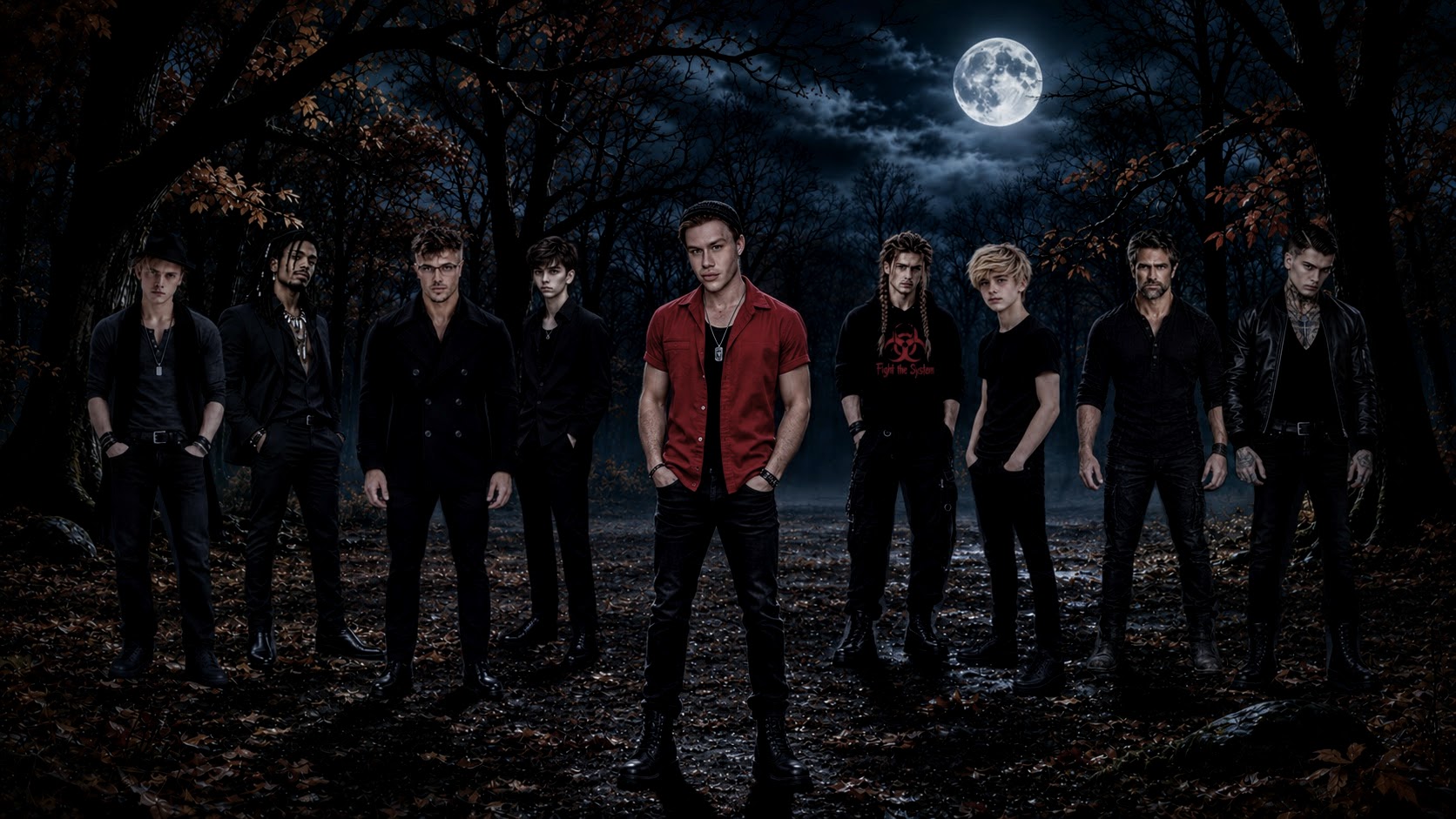
Please, allow me to say one thing: I did not ask artificial intelligence to invent a universe for me. I invented a universe and used artificial intelligence to help bring it to life. There is a difference, and I believe that difference deserves to be understood.
We’re living in a new era of storytelling. The tools available today let an independent creator take a story from an idea to a book, an audiobook, and a website where people can experience it for free. That’s what I wanted to do with A Queer Kind of Magick.
The title I choose for myself is Narrative Architect. My work begins with building worlds and telling stories. For The Sabbatical, I started with a question. What would happen if, for one day, nobody was born and nobody died? I created seven strangers who would live through that day, built the world around them, and decided where their stories would lead.
I directed the book scene by scene. Before the AI drafted prose, I gave it detailed instructions about what happened, what the characters talked about, what they looked like, and even what they wore. Then I went back through those drafts and revised them extensively to keep the story consistent with the world I’d built.
The tools I used could work with the material I gave them for a single scene, maybe even a smaller chapter. The history of the world and everything I had planned for the series were more than they could hold in view at once. I had to catch when a draft contradicted an earlier scene or revealed something I was saving for later. Sometimes a draft went in a different direction altogether. That happened more often than I expected. Every major story decision was mine, and that work went all the way down to the details of individual scenes.
Who pays to bring a book into the world?
When a traditional publisher acquires a book, it generally pays for the publishing work it takes on. The support varies by publisher, contract, and budget. It can include the following.
- Support while the book is being written. Some contracts include an advance against royalties. An editor may also work with the author on the manuscript’s structure, pacing, characters, and revisions.
- Editing and review. Line editing, copyediting, and proofreading can all be part of the process. Some projects also receive fact-checking, specialist review, permissions help, or legal review.
- Design and production. The publisher can pay for cover art, illustrations, interior design, typesetting, ebook formatting, printing, and binding. If it produces an audiobook, it can also cover casting, narration, recording, editing, and mastering.
- Sales and distribution. A publisher can manage ISBNs and retailer listings, pitch books to bookstores and library buyers, and handle inventory, shipping, returns, and reprints.
- Marketing and publicity. A publisher can send out advance copies, pitch reviews and interviews, buy advertising, and organize readings, signings, or tours.
- Rights and royalties. Depending on the contract, a publisher can license foreign, translation, or audio rights and handle royalty statements and payments.
A traditionally published author might receive an advance, professional editing, cover design, distribution, marketing support, or simply someone else handling the technical details. Even when that support is limited, there's often an infrastructure behind the book.
Honestly, I don't have that infrastructure. I am building all of this myself. I understand that some people disapprove of artificial intelligence in creative work. But I refuse to let the absence of a publisher, a production team, or a substantial budget prevent me from bringing this universe to life.
The truth is that I've had to become my very own production coordinator, audiobook producer, website manager, distributor, publicist, and creative director, on top of developing the QKMU.
I needed a little help.
I’m covering the costs of The Sabbatical myself. I pay for the tools I use to create and produce the book, for the audiobook, and for the website that makes it available. I’ve chosen to cover those expenses so anyone who finds the story here can read or listen for free.
I wanted someone to be able to stumble across this world, open the first chapter or press play, and find out if they wanted to stay. If that’s you, welcome to The Sabbatical.
— Wm. “Chip” Pence
Narrative Architect, A Queer Kind of Magick